How to Start a Jewelry Business: A Step-by-Step Guide
To start a jewelry business, choose a niche, decide how you will source your products, set a small launch budget, register your business, build your brand and online shop, then launch with a focused collection and reorder what sells. You do not need a workshop or a large stock to begin: many successful brands start from home by buying finished jewelry from a manufacturer in small quantities and selling it under their own name.
This step-by-step guide is written for first-time founders and small sellers. We are a moissanite jewelry manufacturer, so we use 925 sterling silver moissanite jewelry as the main example, but the steps work for most fine and demi-fine jewelry businesses.
Step 1: Choose Your Niche and Customer
“Jewelry” is too broad to market. A clear niche makes every later decision easier: which styles to stock, how to price, and where to advertise. Popular niches include:
- Bridal and engagement: moissanite engagement rings, wedding bands and bridal sets for couples who want a diamond look on a realistic budget.
- Everyday minimal jewelry: solitaire pendants, stud earrings and tennis bracelets for daily wear and gifting.
- Men’s jewelry: signet-style rings, bands and chains.
- Hip hop and streetwear: iced-out Cuban chains, tennis chains and pendants that pass a diamond tester.
- Personalized jewelry: initial and letter necklaces, engraved pieces and gifts.
Write one sentence that describes your customer, for example: “women aged 25–40 in the US who want affordable, everyday sparkle that does not tarnish.” Use it to check every product you add.
Step 2: Decide How You Will Source Your Jewelry
This is the biggest decision for a new jewelry business, because it sets your budget, margins and how fast you can launch.
- Make it yourself (handmade): full creative control and a strong story, but slow to scale and limited by your own time and skills.
- Dropshipping: almost no stock, but low margins, little control over quality and shipping, and the same products as many other sellers.
- Buy wholesale from a manufacturer: better margins and quality control. With a low-MOQ supplier you can start with small quantities of many styles.
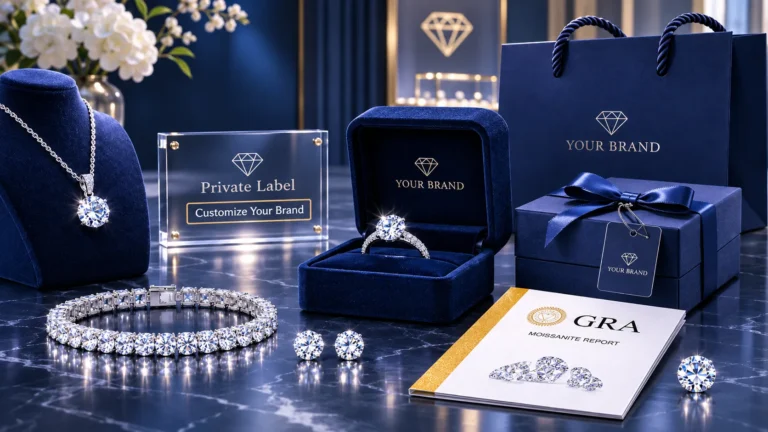
- Private label / OEM: finished products made for your brand, with your logo and packaging, and later your own designs. This is how most jewelry brands grow.
For most new founders, the best path is to start with wholesale ready-stock styles, then move to private label moissanite jewelry once you know what sells. Our wholesale moissanite jewelry buying guide explains what to check in a supplier.
Step 3: Pick Materials Your Customers Will Love
Materials decide your price point and how many returns and complaints you get. A popular combination for new brands is 925 sterling silver with moissanite:
- Real precious metal: 925 sterling silver, plated in white gold (rhodium), 18K yellow gold or rose gold, feels and looks premium, unlike plated brass.
- A real gemstone with diamond-like sparkle: moissanite has more fire than diamond and is 9.25 on the Mohs hardness scale, so it is durable enough for everyday rings.
- An easy story to sell: each piece can come with a GRA certificate, and moissanite passes a standard diamond tester. See What Is Moissanite? and Does Moissanite Pass a Diamond Tester?
- Healthy margins: moissanite gives customers a diamond look at a fraction of the price, so you can price attractively and still earn a good margin.
Step 4: Set Your Budget and Startup Costs
A jewelry business can start small. Your main startup costs are usually:
- Samples and first stock: with a low-MOQ manufacturer you can start with a few pieces per style. At JOVEGEM, ready-stock styles start from 1 piece per style.
- Packaging: boxes, pouches, cards and shipping mailers.
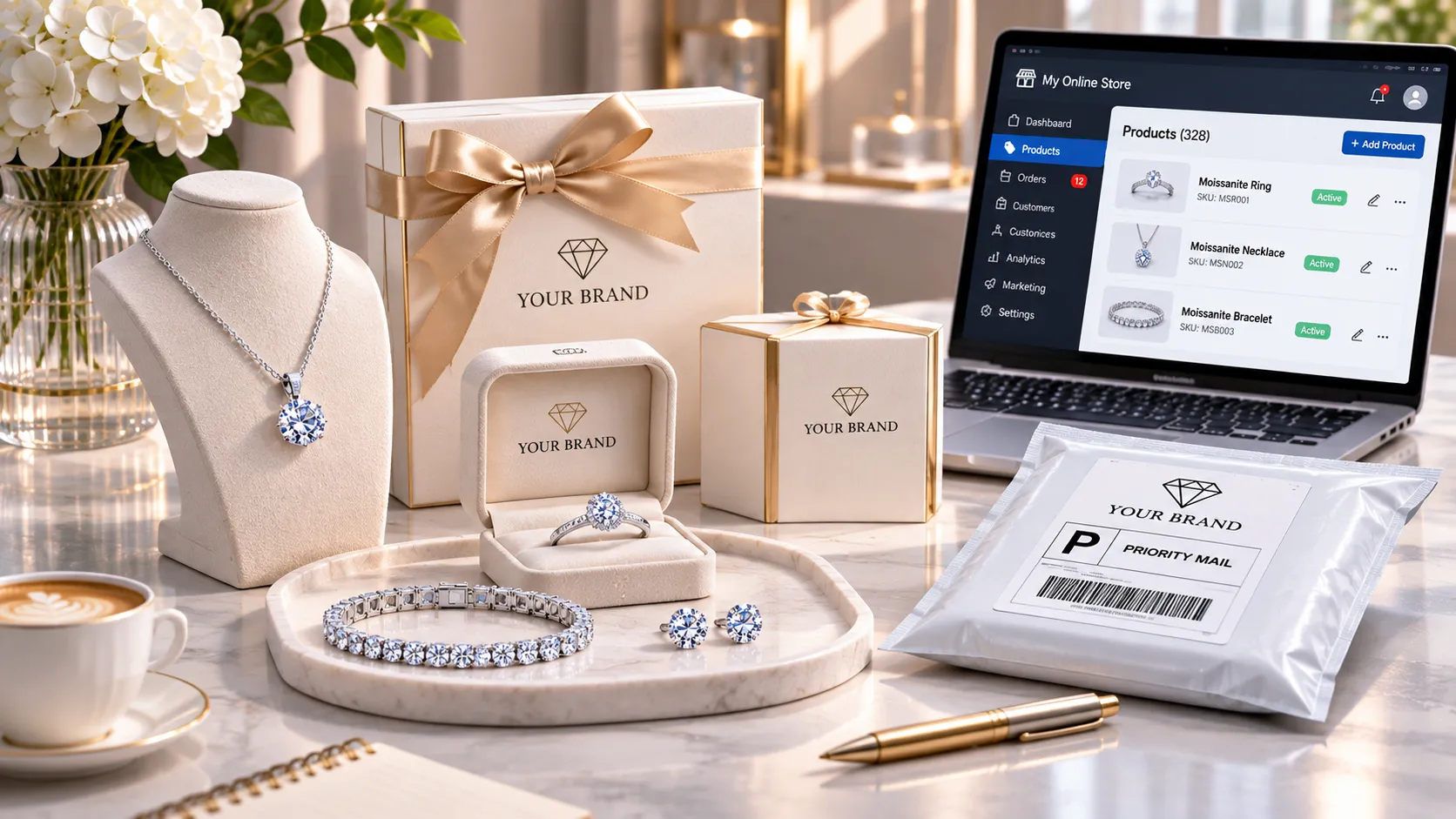
- Website or marketplace fees: Shopify, Etsy, Amazon or TikTok Shop.
- Photography: clean product photos and a few lifestyle or on-model shots.
- Business registration and accounting.
- Marketing: content, influencer seeding and a small ad budget.
Keep some budget back for reorders. Your first best seller will sell out, and being in stock when it does is how small brands grow.
Step 5: Register Your Business and Handle the Basics
Rules depend on your country and state, so check with a local accountant or your government’s small-business office. Most new jewelry businesses need to:
- Register a business name and a legal structure (for example a sole proprietorship or LLC in the US, or a limited company in the UK).
- Get any required seller’s permit and set up sales tax or VAT collection.
- Open a separate business bank account.
- Check that your brand name is not already trademarked, and consider registering your own trademark.
- Learn the import duties for jewelry in your country if you buy from overseas. A supplier that offers DDP (delivered duty paid) shipping can make this simpler.
Step 6: Build Your Brand
- Name: short, easy to spell and say, and available as a domain and social handle.
- Logo and look: a simple logo, two or three brand colors and one consistent photo style.
- Packaging: one of the cheapest ways to look premium. Custom gift boxes and a logo engraved on the jewelry make even a small brand feel established.
- Story: why you started, who you design for, and why customers can trust your quality.
Step 7: Choose Where to Sell
- Your own website (Shopify, WooCommerce): highest margin and full control of your brand and customer data.
- Etsy: built-in buyers for personalized and gift jewelry.
- Amazon: large reach, but competitive and strict about product claims.
- TikTok Shop and Instagram: strong for sparkly, visual products like moissanite, which look great on video.
- Markets, pop-ups and local boutiques: good for testing products and building early reviews.
Start with one or two channels and do them well, rather than opening five shops at once.
Step 8: Price Your Jewelry for Profit
A common starting point in jewelry retail is to price at two to three times your landed cost (product, packaging, shipping and duties). Then check the result against competitors in your niche and your customer’s budget. Remember to include marketplace fees, payment fees, returns and free-shipping costs in your margin.
Step 9: Launch, Market and Reorder
- Launch with a focused collection of 10–30 styles instead of hundreds.
- Post short videos that show the sparkle: moissanite under a phone flashlight or sunlight is very shareable.
- Send pieces to small creators in your niche for honest reviews.
- Collect emails from day one and reward early customers.
- Track which styles sell, and reorder those first. Drop the slow sellers.
Starter Styles That Sell Well
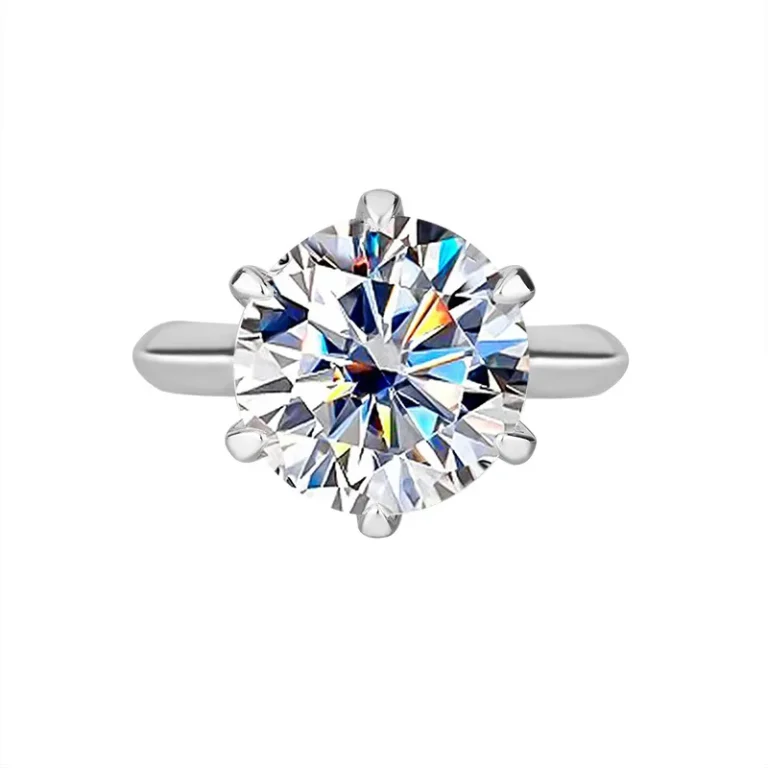
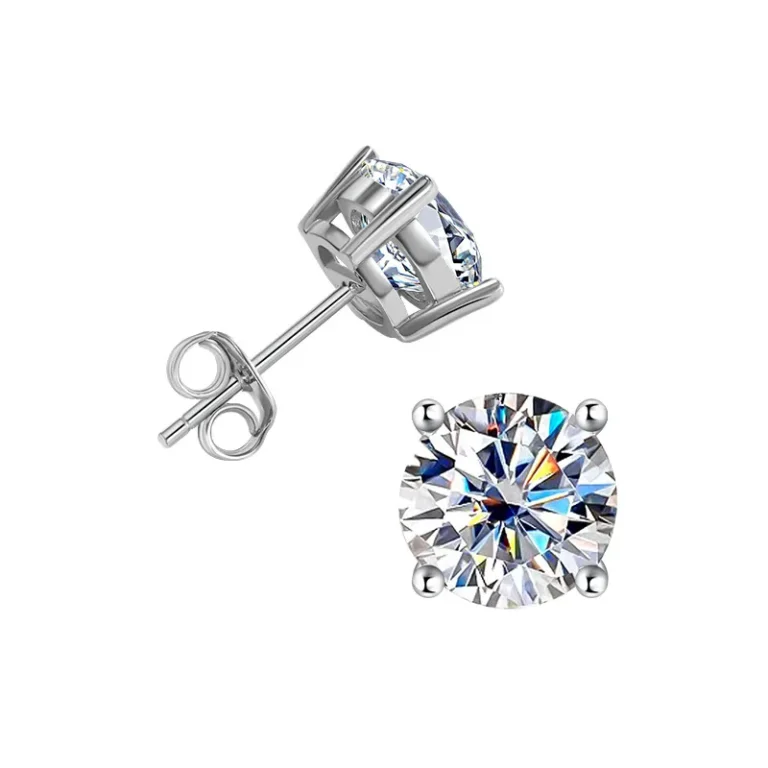
If you are building a first moissanite collection, these classics are a reliable base. All are 925 sterling silver with moissanite and a GRA certificate, available from 1 piece per style.

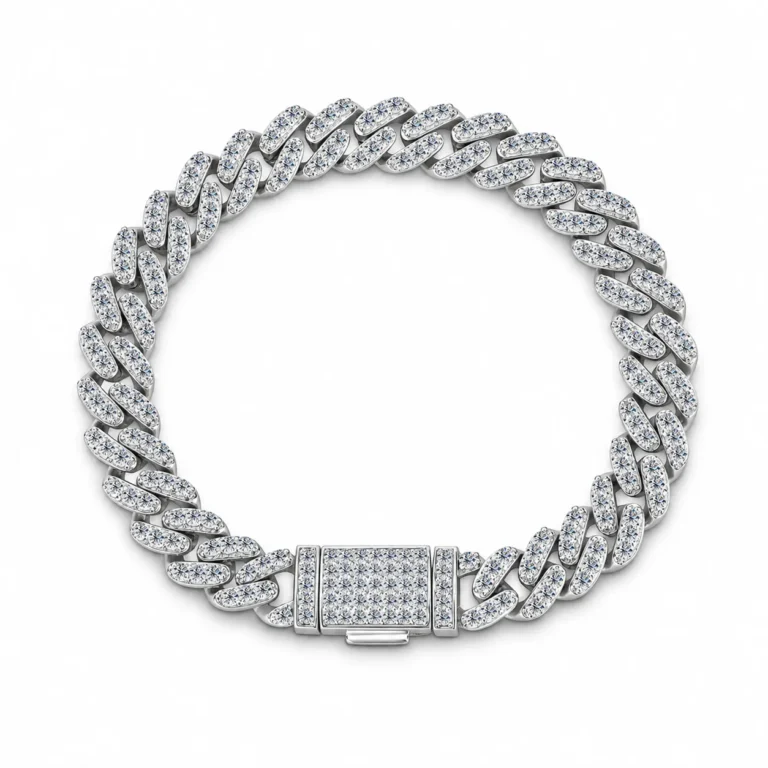
Browse the full wholesale catalog.
Frequently Asked Questions
How much does it cost to start a jewelry business?
It depends on your sourcing model and sales channels. Buying ready-stock jewelry from a low-MOQ manufacturer keeps the first investment small, because you can start with a few pieces per style and reorder what sells.
Can I start a jewelry business from home?
Yes. Many jewelry brands start from home by sourcing finished pieces from a manufacturer and selling online. Check the local rules for running a business from your address.
Is a jewelry business profitable?
It can be. Jewelry is small, light and easy to ship, and well-chosen pieces carry healthy margins. Profit depends on your niche, pricing, marketing costs and reorder discipline.
Do I need a license to sell jewelry?
In most places you need a registered business and, in many US states, a seller’s permit for sales tax. Requirements vary, so check with your local authority or an accountant.
Should I sell moissanite or lab-grown diamond?
Moissanite gives a diamond look at a lower price and is easy to explain with a GRA certificate, which suits most new brands. JOVEGEM focuses on 925 silver moissanite jewelry, with lab-grown diamond pieces available on request.
Can I put my own logo on the jewelry?
Yes. With a private label or OEM manufacturer, your logo can be engraved or stamped on the jewelry and printed on custom packaging.
Start Your Jewelry Business with a Factory-Direct Supplier
JOVEGEM is a factory-direct manufacturer of 925 sterling silver moissanite jewelry, with 10+ years of experience, 500+ in-stock styles and in-house crystal growth for D color VVS1 moissanite. We help new brands and online sellers start small, from 1 piece per style, and grow into private label and custom designs. Send us an inquiry or message us on WhatsApp to get our catalog and price list.